
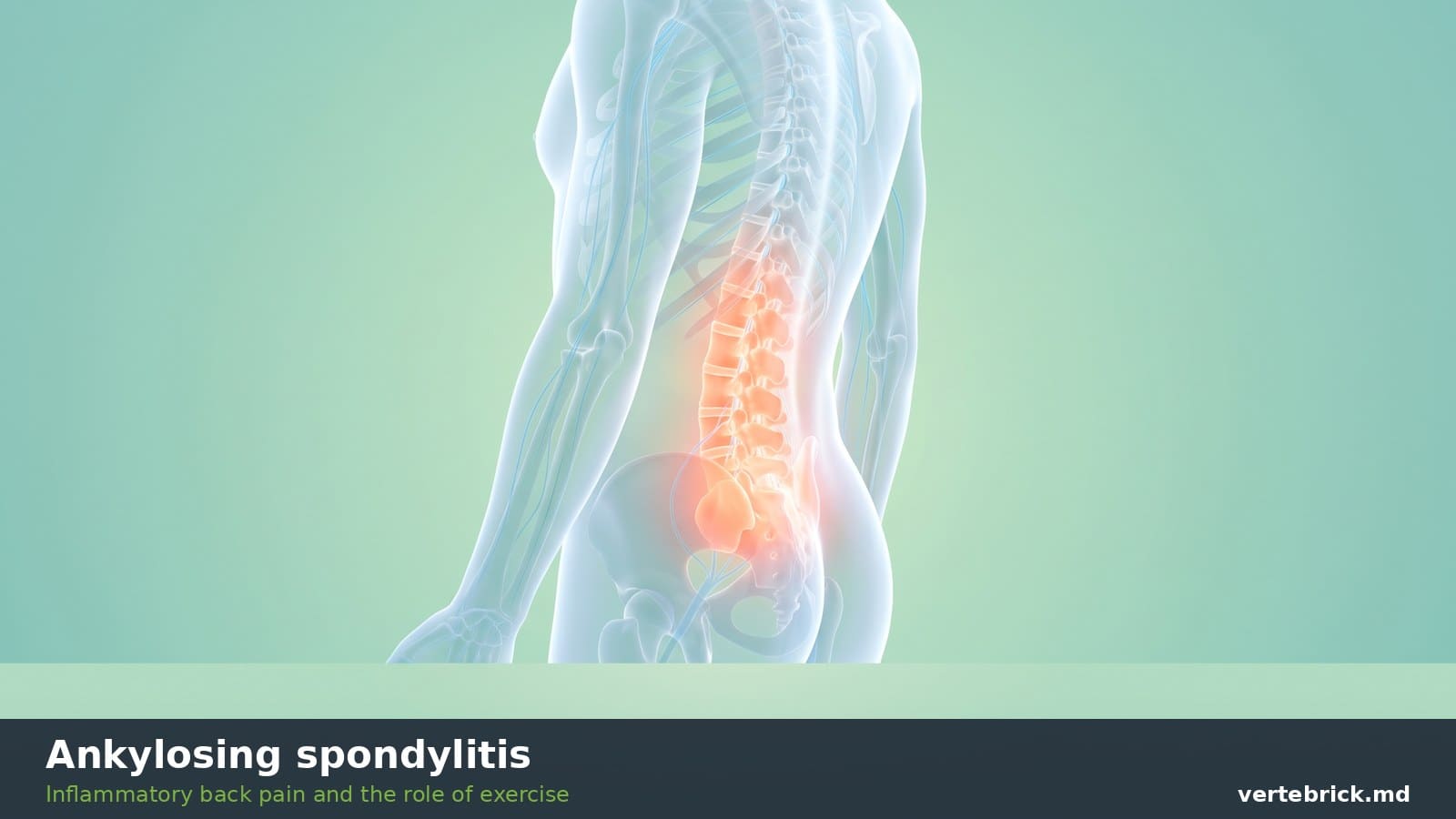
In short: ankylosing spondylitis (axial spondyloarthritis) is an inflammatory disease of the spine and the sacroiliac joints. It usually starts before 45 with back pain and morning stiffness that ease with movement, not with rest. A rheumatologist makes the diagnosis and manages medication. Regular exercise is a core part of treatment and helps keep you mobile.
What ankylosing spondylitis is
It is a condition in which the immune system causes inflammation in the spine, the joints between the spine and pelvis and sometimes other joints or the eyes. Without treatment, long-term inflammation can gradually stiffen the spine. Today, modern medication and exercise control the disease well for many people.
Inflammatory or mechanical pain?
Ordinary mechanical pain gets worse with activity and better with rest. Inflammatory pain starts gradually, usually before 45, lasts more than 3 months, wakes you in the second half of the night, causes morning stiffness of more than 30 minutes and improves with movement. If this sounds like you, ask your doctor about seeing a rheumatologist.
Typical signs
- low back or buttock pain for more than 3 months that started before 45;
- morning stiffness lasting more than half an hour;
- pain that eases after movement, not after rest;
- waking from pain in the second half of the night;
- sometimes heel pain, swollen joints or a red, painful eye.
What helps
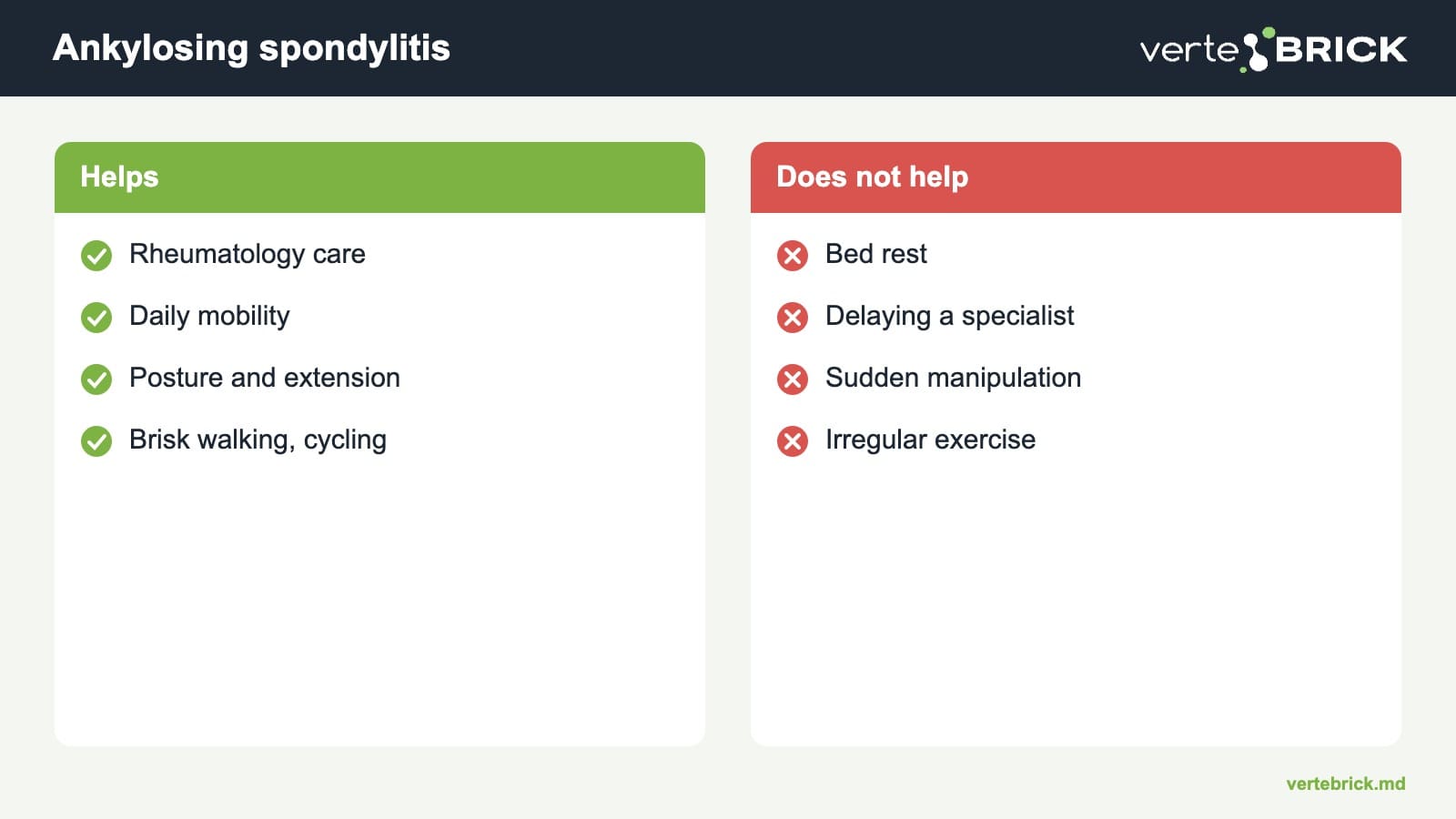
- diagnosis and treatment by a rheumatologist;
- daily mobility exercises for the spine, hips and chest;
- posture and spinal extension exercises;
- regular aerobic activity, such as brisk walking or cycling;
- stopping smoking.
What doesn't help
- long bed rest;
- putting off seeing a rheumatologist for years;
- sudden spinal manipulation;
- exercising only on painful days, without regularity.
How long it takes
Ankylosing spondylitis is a long-term condition, but its course can be controlled. With medication and regular exercise, many people live active lives. Exercise has to be kept up long term, not just for a few weeks.
When to see a doctor urgently
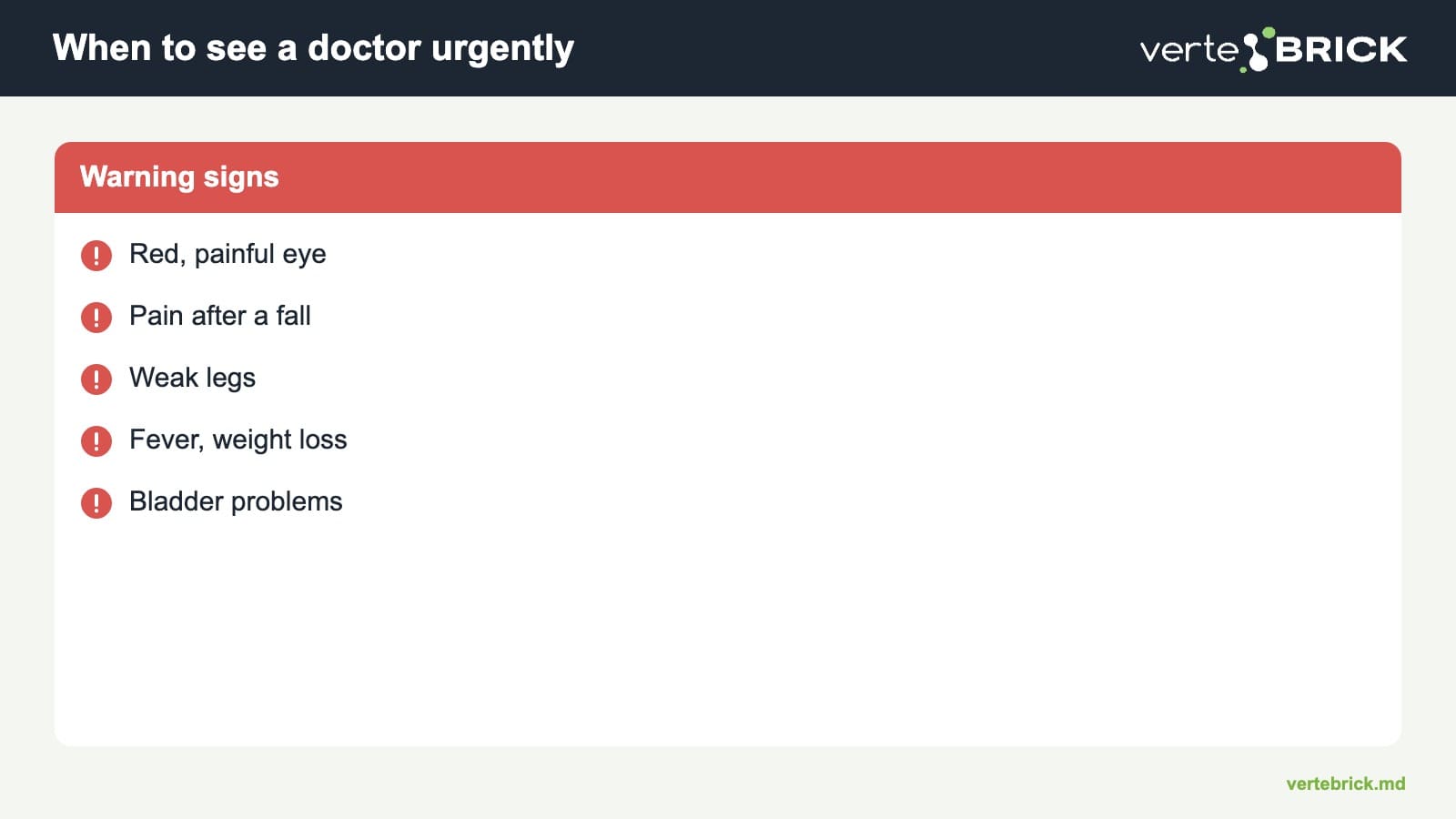
- a red, painful eye that is sensitive to light;
- sudden severe pain after a fall, even a minor one;
- numbness or weakness in the legs;
- fever, weight loss or unusual tiredness;
- problems passing urine or loss of control.
How we work at Vertebrick
We work alongside your rheumatologist's recommendations. We measure spine, hip and chest mobility and build a short daily home exercise programme that we adjust over time.
Frequently asked questions
What is ankylosing spondylitis?
It is a long-term inflammatory disease of the spine and sacroiliac joints that causes back pain and stiffness, especially in the morning.
Does physiotherapy help ankylosing spondylitis?
Yes. Regular exercise is recommended in international guidelines and helps mobility, posture and function, alongside treatment from a rheumatologist.
How do I tell inflammatory back pain from ordinary back pain?
Inflammatory pain starts gradually, before 45, causes morning stiffness of more than 30 minutes and improves with movement rather than rest.
Where can I get physiotherapy for ankylosing spondylitis in Chișinău?
At the Vertebrick clinic in Chișinău, with a mobility assessment and a home exercise programme.

Book an assessment
Come in for an assessment at Vertebrick, 12/2 Traian Blvd, Chișinău, Moldova. We are open Monday to Saturday, 08:00–20:00.
📞 +373 69 82 62 12 · WhatsApp: wa.me/37369826212 · Fill in the form
Author: the Vertebrick team, physiotherapy clinic in Chișinău. This article is for information only and does not replace a medical consultation.
Sources
- Ramiro S et al. ASAS-EULAR recommendations for the management of axial spondyloarthritis: 2022 update. Ann Rheum Dis. 2023;82(1):19–34.
- Regnaux JP et al. Exercise programmes for ankylosing spondylitis. Cochrane Database Syst Rev. 2019;10:CD011321.
- Sieper J, Poddubnyy D. Axial spondyloarthritis. Lancet. 2017;390(10089):73–84.