
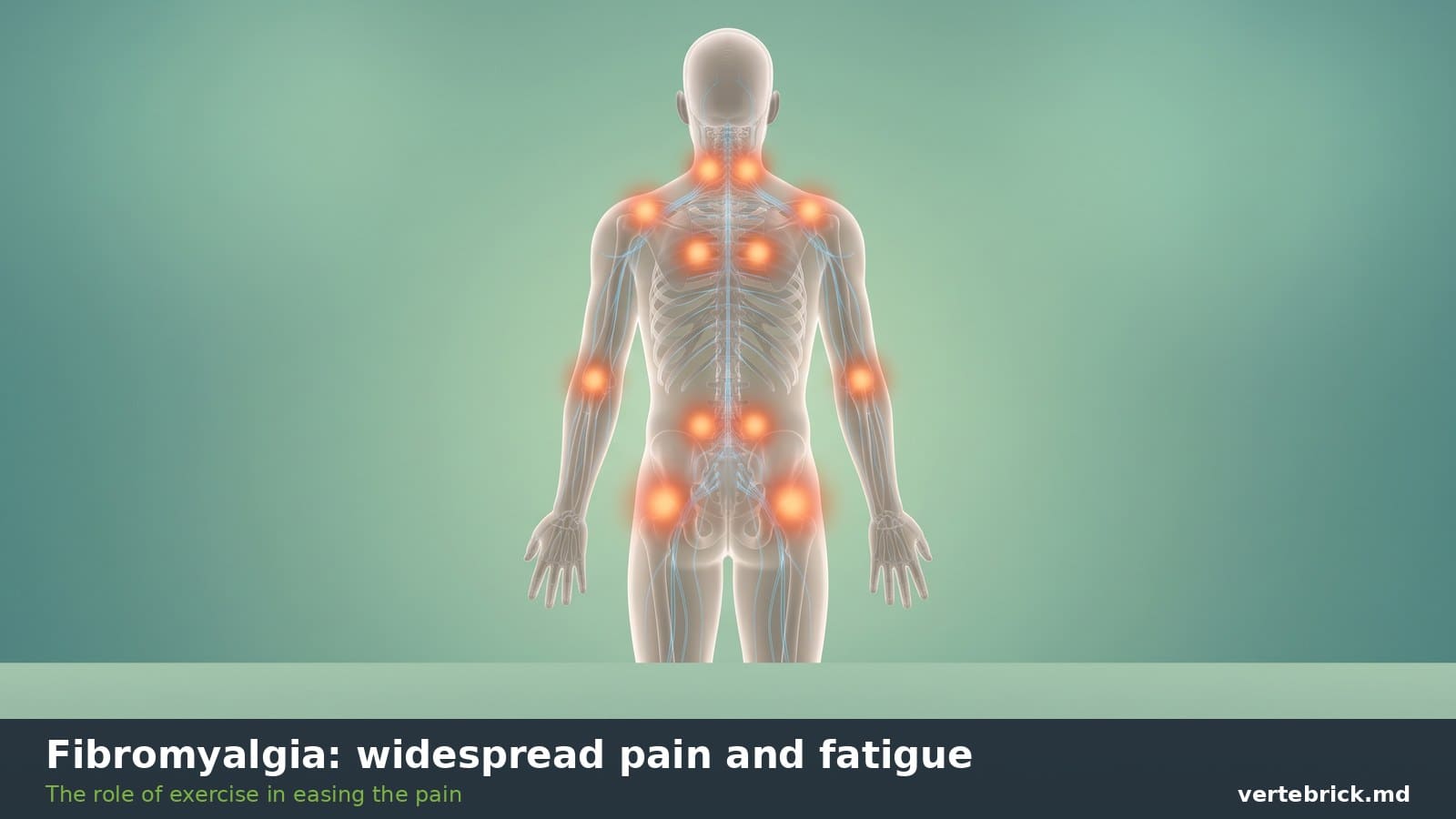
In short: fibromyalgia is a long-term condition in which pain is felt in many parts of the body, together with fatigue, unrefreshing sleep and sometimes poor concentration. It does not damage joints or muscles: the problem lies in how the nervous system processes pain. A doctor makes the diagnosis. Gradually increased exercise is the best-proven non-drug treatment.
What fibromyalgia is
In fibromyalgia the nervous system becomes more sensitive to pain signals. Ordinary touch or effort can feel painful, and the pain moves from one area to another. Blood tests and X-rays are usually normal, but the pain is real. It is more common in women and often starts between the ages of 30 and 60.
Fibromyalgia or something else?
Widespread pain can have other causes: thyroid problems, low vitamin D, inflammatory rheumatic diseases or side effects of medicines. That is why the doctor first does an examination and a few simple blood tests. Fibromyalgia is diagnosed when widespread pain has lasted more than 3 months and other causes have been ruled out or do not explain the whole picture.
Typical signs
- pain in many areas of the body, on both sides, for more than 3 months;
- fatigue that does not go away with rest;
- light or unrefreshing sleep;
- morning stiffness;
- trouble with concentration and memory (“brain fog”);
- sometimes headaches, irritable bowel or sensitivity to cold.
What helps
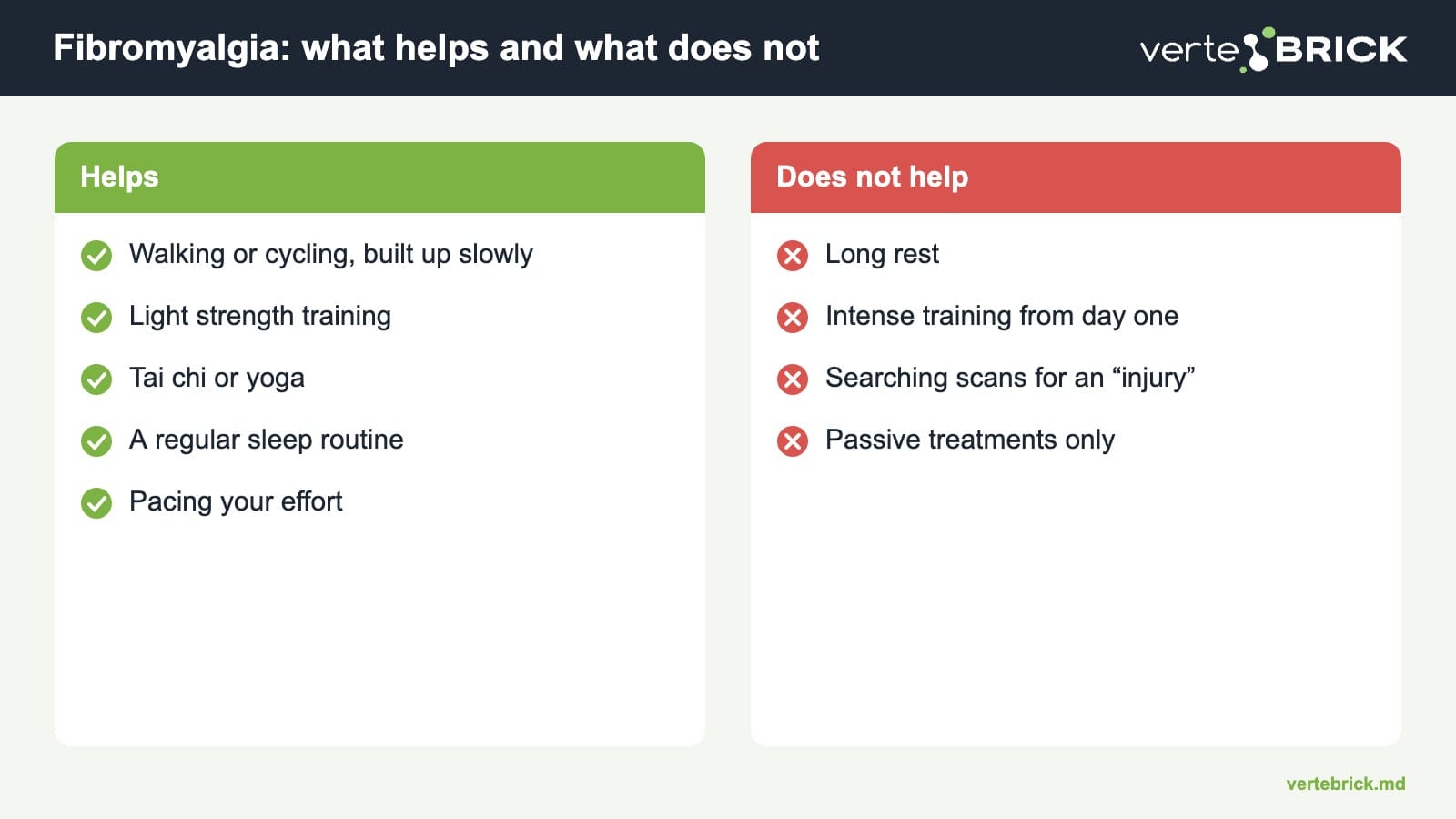
- gentle aerobic exercise, built up gradually, such as walking or cycling;
- light strength training;
- slow movement such as tai chi or yoga;
- a regular sleep routine;
- understanding the condition and pacing your effort on harder days.
What does not help
- long rest and avoiding all movement;
- intense training from the start, which can flare the pain;
- an endless search for an “injury” on scans;
- passive treatments used as the only approach.
How long it lasts
Fibromyalgia is usually long-lasting, but symptoms can ease a lot. The effect of exercise builds gradually, usually after several weeks of regular work. Start gently: a small rise in pain after exercise is normal and settles, and the intensity goes up only when the body has adapted.
When to see a doctor
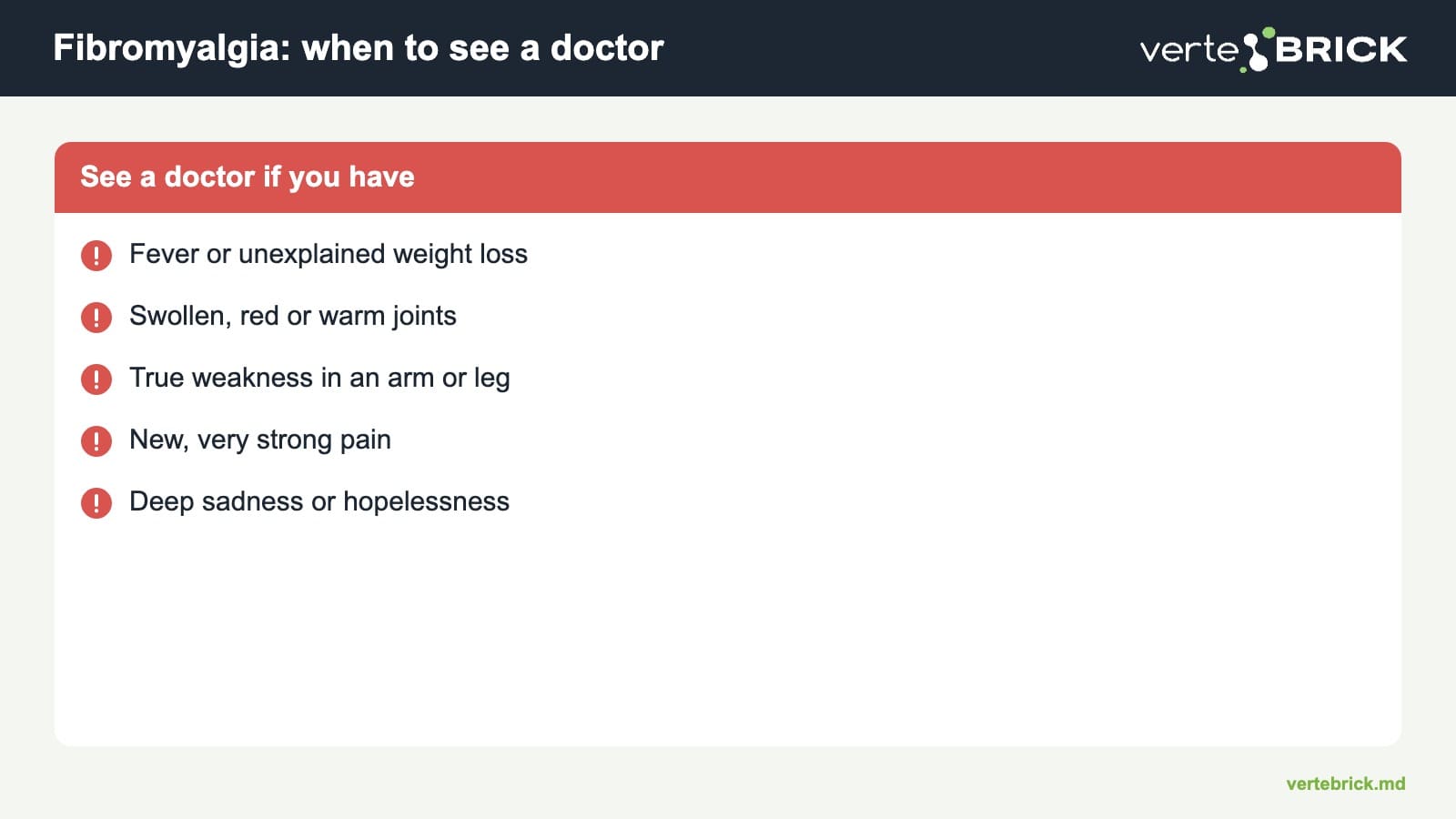
- fever, unexplained weight loss or night sweats;
- swollen, red or warm joints;
- true weakness in an arm or leg;
- new, very strong pain that is unlike your usual pain;
- deep sadness or a sense of hopelessness.
How we work at Vertebrick
We start from the doctor’s diagnosis. We assess exercise tolerance, strength and mobility, and build an exercise programme that starts at an easy level and progresses gradually. We show you how to pace yourself on harder days so that you keep moving.
Frequently asked questions
What is fibromyalgia?
It is a long-term condition with widespread body pain, fatigue and unrefreshing sleep, linked to increased sensitivity of the nervous system to pain.
Does fibromyalgia damage the joints?
No. Fibromyalgia does not damage joints or muscles, even though the pain is real and can be severe.
What exercise is recommended for fibromyalgia?
Gentle aerobic exercise, light strength training and slow movement such as tai chi or yoga, started gently and built up gradually.
Where can I get physiotherapy for fibromyalgia in Chisinau?
At the Vertebrick clinic in Chisinau, with an assessment of exercise tolerance and a gradually progressed exercise programme.

Book an assessment
Come in for an assessment at Vertebrick, 12/2 Traian Blvd, Chișinău, Moldova. We are open Monday to Saturday, 08:00–20:00.
📞 +373 69 82 62 12 · WhatsApp: wa.me/37369826212 · Fill in the form
Author: the Vertebrick team, physiotherapy clinic in Chișinău. This article is for information only and does not replace a medical consultation.
Sources
- Macfarlane GJ et al. EULAR revised recommendations for the management of fibromyalgia. Ann Rheum Dis. 2017;76(2):318–328.
- Bidonde J et al. Aerobic exercise training for adults with fibromyalgia. Cochrane Database Syst Rev. 2017;6:CD012700.
- Wolfe F et al. 2016 Revisions to the 2010/2011 fibromyalgia diagnostic criteria. Semin Arthritis Rheum. 2016;46(3):319–329.
- Clauw DJ. Fibromyalgia: a clinical review. JAMA. 2014;311(15):1547–1555.