
Did your MRI report say “disc herniation at L4–L5” or “L5–S1”? In most cases, that does not mean you need surgery. Here is what a herniated disc is, the usual symptoms, when to see a doctor urgently, and how physiotherapy can help.
What a herniated disc is
Between your vertebrae sit discs, small cushions that absorb load. When the outer layer of a disc gives way, part of its content pushes out. That is a herniation. Sometimes it presses on or irritates a nerve, and the pain travels into the buttock or leg.
Most herniations happen in the lower back, where the spine carries the most weight.
Common symptoms
- lower back pain, sometimes sudden, after lifting or a careless movement;
- pain running down the buttock and leg (“sciatica”);
- numbness or tingling in the leg or foot;
- pain that gets worse when you sit for long, cough or strain;
- weakness in the leg, for example difficulty walking on your toes or heels.
When to see a doctor URGENTLY
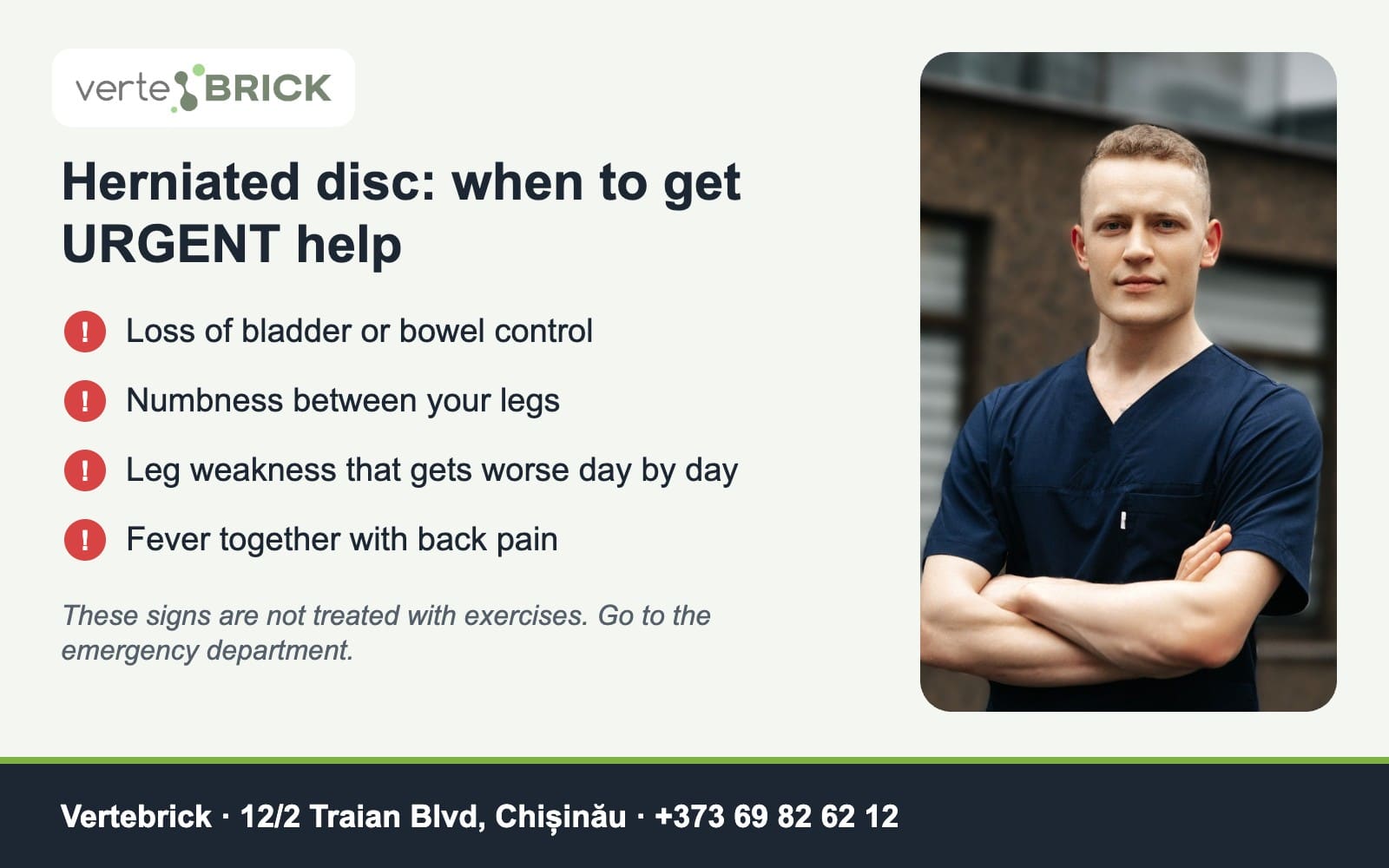
Go to the emergency department straight away if you have:
- loss of control over your bladder or bowels;
- numbness between your legs (the “saddle area”);
- leg weakness that gets worse day by day;
- fever together with back pain.
These signs are rare but serious, and they are not treated with exercises.
Surgery or not?
For many people, pain from a herniated disc eases within weeks or months without surgery. Surgery is usually discussed with a neurosurgeon when the urgent signs above appear, or when pain and weakness do not improve after proper treatment.
The MRI picture alone does not tell how serious it is. What matters is what you feel and what you can do every day.
How physiotherapy helps
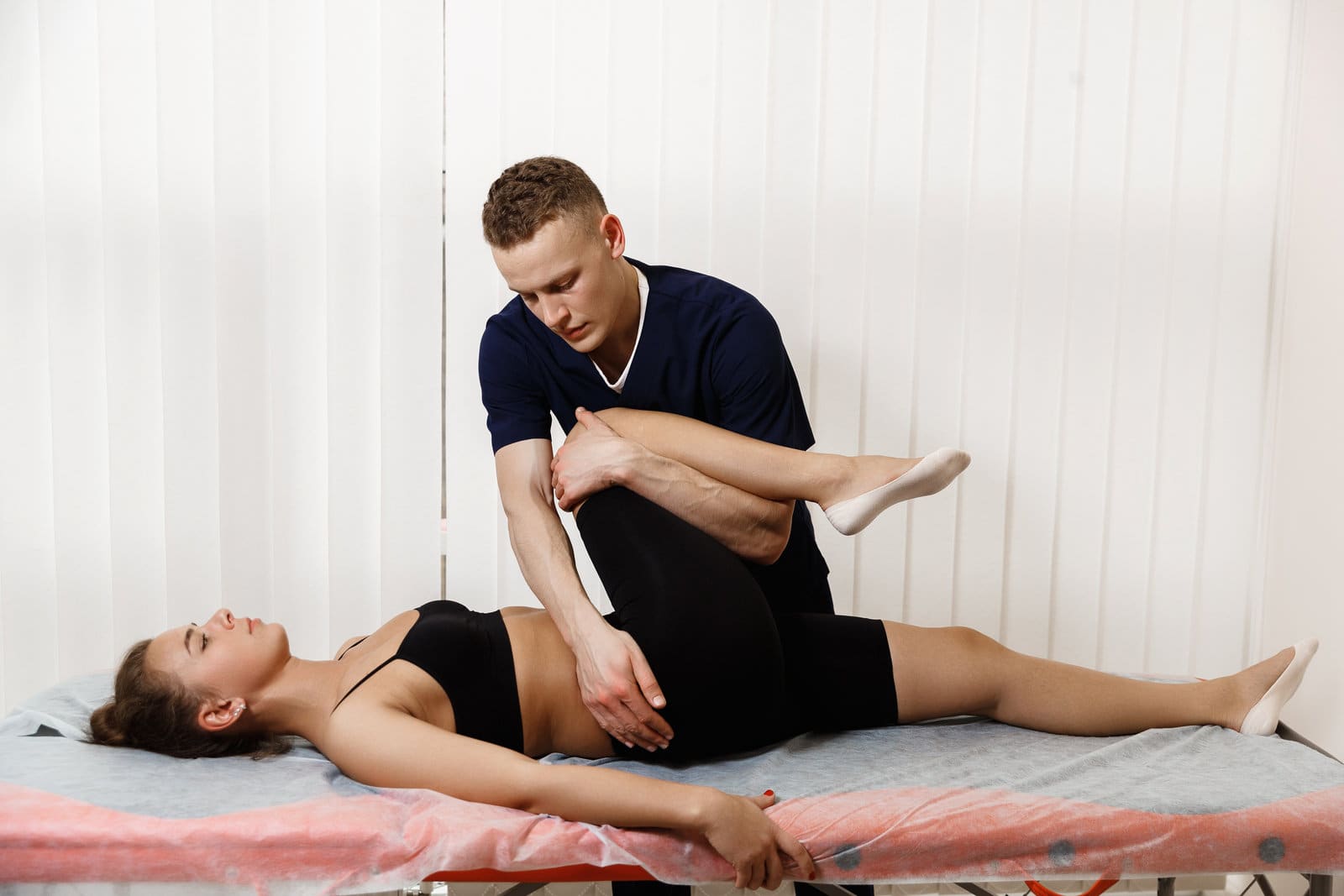
At Vertebrick, treatment starts with an assessment: which movements hurt, which ease the pain, how strong your muscles are, and how you sit and move. Based on it, the physiotherapist builds a personal plan, which may include:
- exercises that reduce pressure on the nerve and calm the pain;
- strengthening the muscles that support your spine;
- correcting your posture at the desk, in the car and when lifting;
- a gradual return to walking, sport and work;
- a home exercise programme to keep the pain from coming back.
Every session is supervised by a licensed physiotherapist, who adjusts the exercises as you progress.
What you can do today
- Do not stay in bed for days. Gentle movement such as walking usually helps more than full rest.
- Get up from your chair every 30–40 minutes.
- Until your assessment, avoid lifting with a bent back.
- Do not start exercises from the internet if they make the leg pain worse.

Book an assessment
If you have a herniated disc or pain running down your leg, come for an assessment at Vertebrick, 12/2 Traian Boulevard, Chișinău. We are open Monday to Saturday, 08:00–20:00.
📞 +373 69 82 62 12 · WhatsApp: wa.me/37369826212 · Fill in the form
This article is for information only and does not replace a medical consultation.