
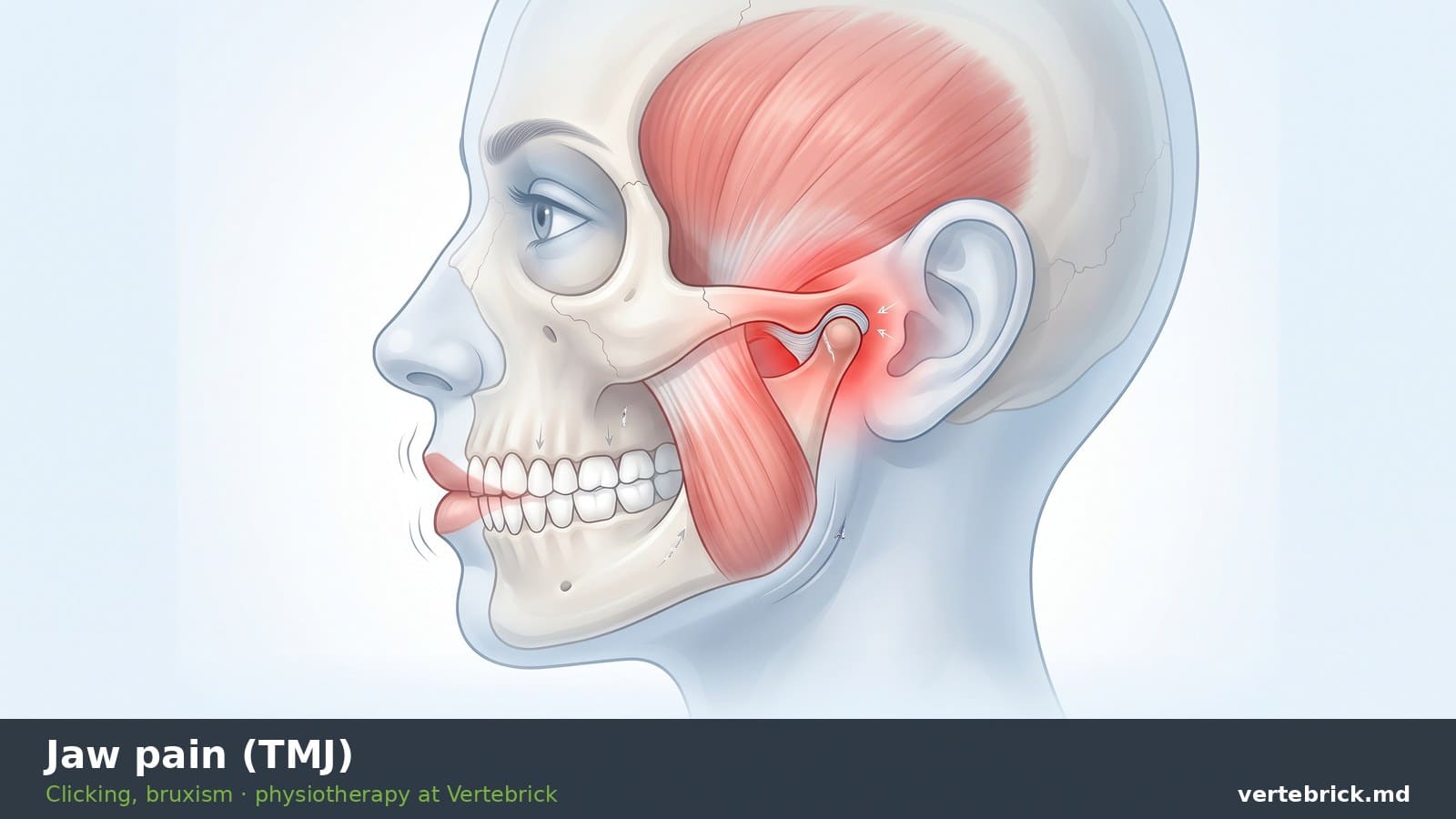
In short: jaw pain most often comes from the temporomandibular joint (TMJ) and the chewing muscles. It shows up as pain in front of the ear, clicking when you open your mouth, tired jaw muscles when chewing, or headaches. Clenching and grinding the teeth (bruxism) put a lot of load on these structures. Most cases improve with simple measures: exercises, relaxing the jaw and better habits, together with your dentist.
What the TMJ is and why it hurts
The temporomandibular joint connects the lower jaw to the skull, just in front of the ear. It works every time you speak, chew or swallow. Pain appears when the chewing muscles are overloaded or when the disc inside the joint does not move smoothly. Stress, clenching by day or night, chewing gum and head posture can all play a part.
Is a clicking jaw dangerous?
A painless click is common and usually needs no treatment. An assessment is worthwhile if the click comes with pain, if mouth opening becomes limited or if the jaw locks from time to time.
Typical signs
- pain in front of the ear or in the cheek, especially when chewing;
- clicking or grating when opening the mouth;
- limited mouth opening or the jaw shifting to one side;
- a tired jaw in the morning after clenching at night;
- headaches at the temples or tension in the neck.
What helps
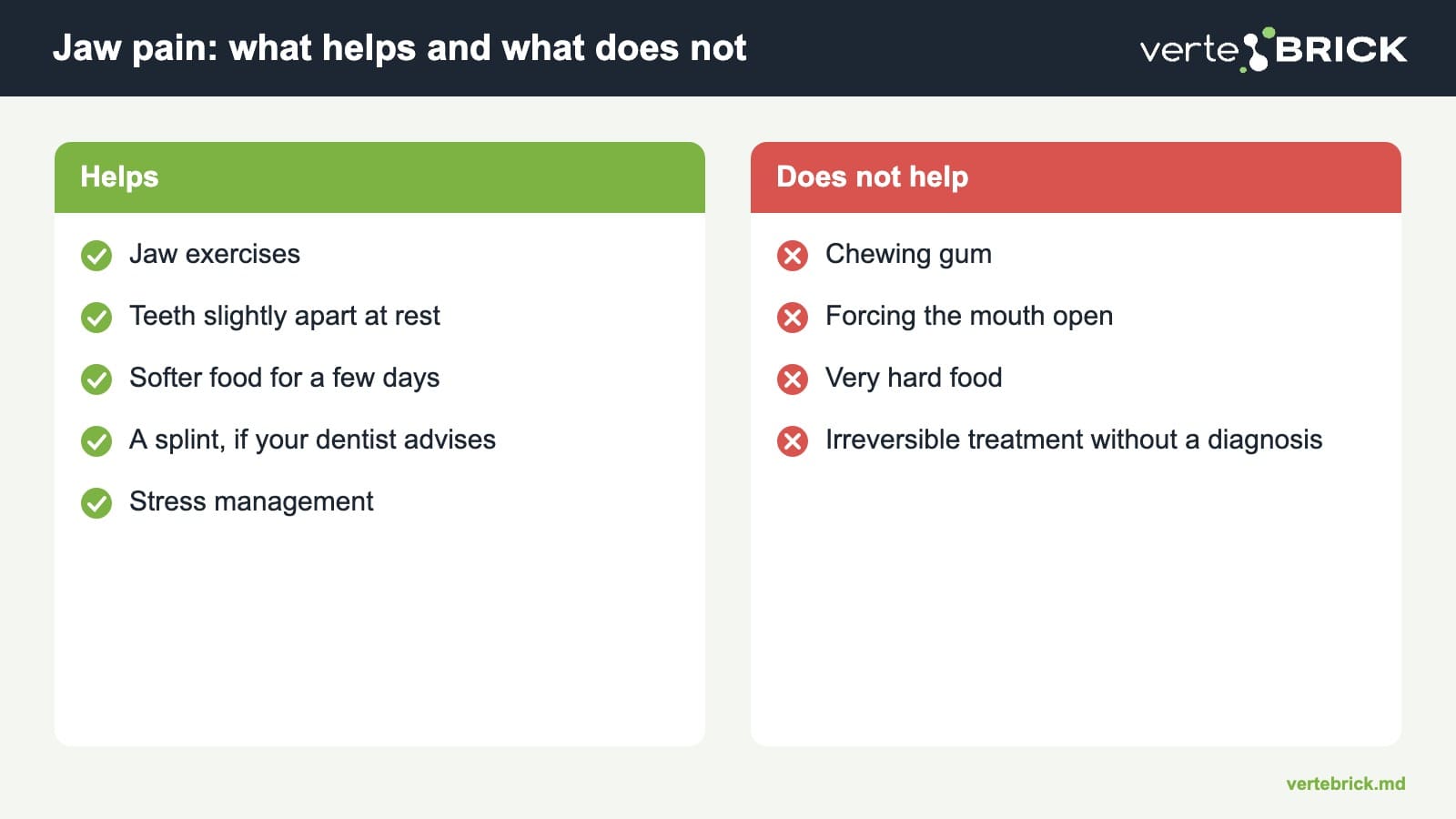
- jaw mobility and control exercises, learned correctly;
- the rest position: lips closed, teeth slightly apart, tongue on the roof of the mouth;
- softer food for a few days when it is painful;
- a night splint, if your dentist recommends one;
- stress management and exercises for the neck and posture.
What does not help
- chewing gum and biting nails or pens;
- forcing the mouth open when it hurts;
- biting into very hard or very large food;
- irreversible dental treatment without a clear diagnosis.
How long it lasts
Many episodes of jaw pain settle within a few weeks with simple measures. If clenching and stress continue, the pain can come back, so the exercises and new habits need to be kept up long term.
When to see a doctor urgently
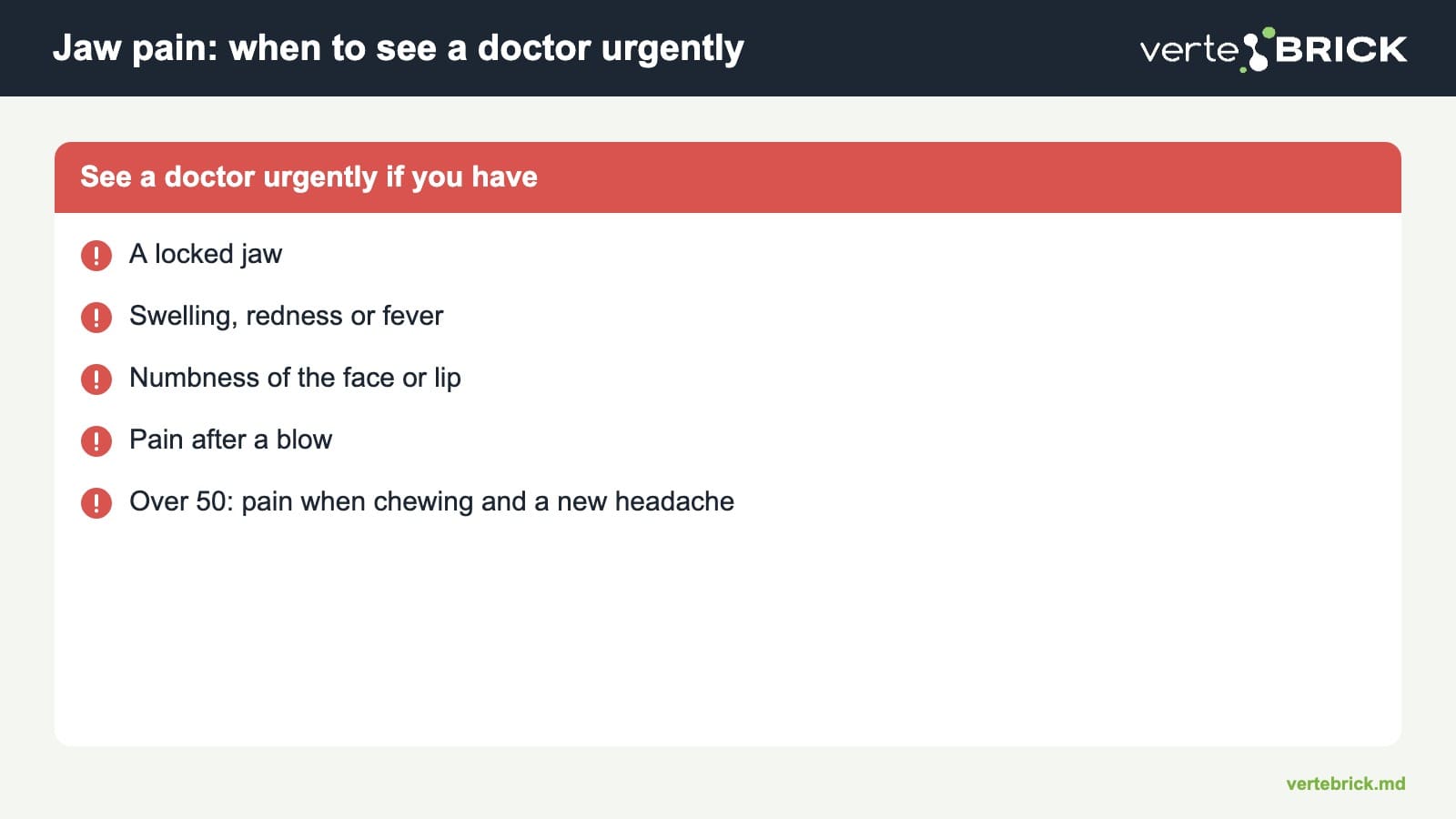
- a locked jaw — you cannot close or open your mouth;
- swelling, redness or fever in the face;
- numbness of the face or lip;
- pain after a blow or a fall;
- over 50: pain when chewing with a new headache or vision problems.
How we work at Vertebrick
We assess jaw movement, the chewing muscles, the neck and posture. We use gentle manual techniques and teach you short exercises for home. When needed, we work with your dentist, for example on a night splint.
Frequently asked questions
Why does my jaw hurt in front of my ear?
Most often because the chewing muscles or the temporomandibular joint are overloaded, for example by clenching and stress.
Does a clicking jaw need treatment?
A painless click usually needs no treatment. An assessment is useful if there is pain, mouth opening is limited or the jaw locks.
Does physiotherapy help TMJ pain?
Yes. Jaw exercises and manual therapy reduce pain and improve mouth opening for many people, alongside advice from a dentist.
Where can I get physiotherapy for jaw pain in Chisinau?
At the Vertebrick clinic in Chisinau, with an assessment of the jaw, neck and posture and a home exercise programme.

Book an assessment
Come in for an assessment at Vertebrick, 12/2 Traian Blvd, Chișinău, Moldova. We are open Monday to Saturday, 08:00–20:00.
📞 +373 69 82 62 12 · WhatsApp: wa.me/37369826212 · Fill in the form
Author: the Vertebrick team, physiotherapy clinic in Chișinău. This article is for information only and does not replace a medical consultation.
Sources
- Armijo-Olivo S et al. Effectiveness of manual therapy and therapeutic exercise for temporomandibular disorders: systematic review and meta-analysis. Phys Ther. 2016;96(1):9–25.
- Schiffman E et al. Diagnostic Criteria for Temporomandibular Disorders (DC/TMD) for clinical and research applications. J Oral Facial Pain Headache. 2014;28(1):6–27.
- List T, Jensen RH. Temporomandibular disorders: old ideas and new concepts. Cephalalgia. 2017;37(7):692–704.