

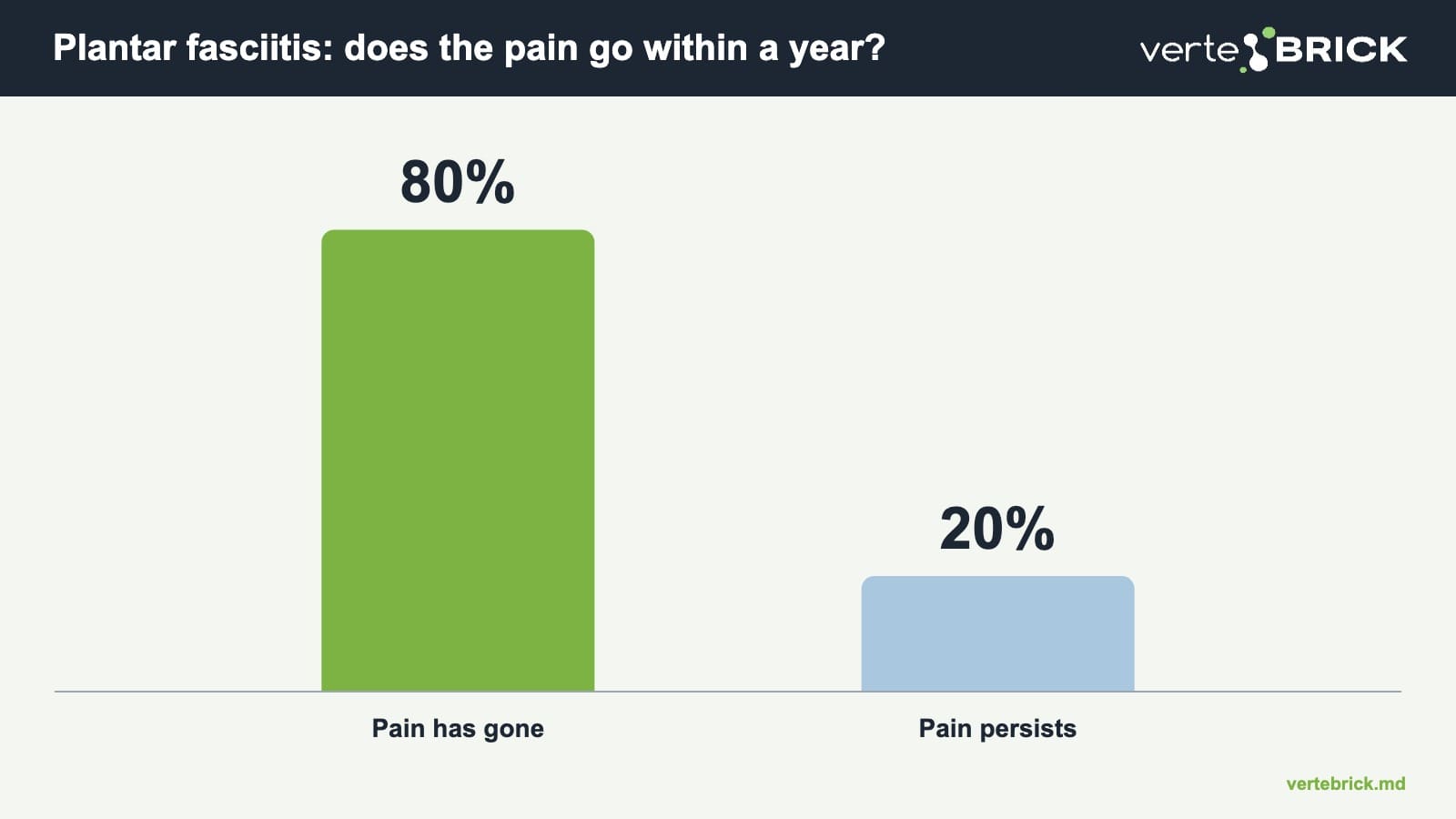
In short: plantar fasciitis is the most common cause of heel pain in adults. The typical sign is pain with the first steps in the morning or after sitting. In more than 8 out of 10 people the pain goes away within a year, and stretching and strength exercises shorten that time considerably.
What plantar fasciitis is
The plantar fascia is a thick band of tissue that runs from the heel to the toes and supports the arch of the foot. When it is overloaded, the area where it attaches to the heel becomes painful. It is most common between 40 and 60, in people who stand a lot, runners and people with a higher body weight.
Typical signs: pain under the heel, especially with the first steps in the morning or when getting up from a chair, which eases after a few minutes of walking and comes back towards the evening or after long periods on your feet.
What about a “heel spur”?
Many people learn from an X-ray that they have a “heel spur” and assume it causes the pain. In fact, spurs are also found in many people with no pain, and pain can exist without a spur. The treatment is the same: you treat the fascia, not the spur.
What helps
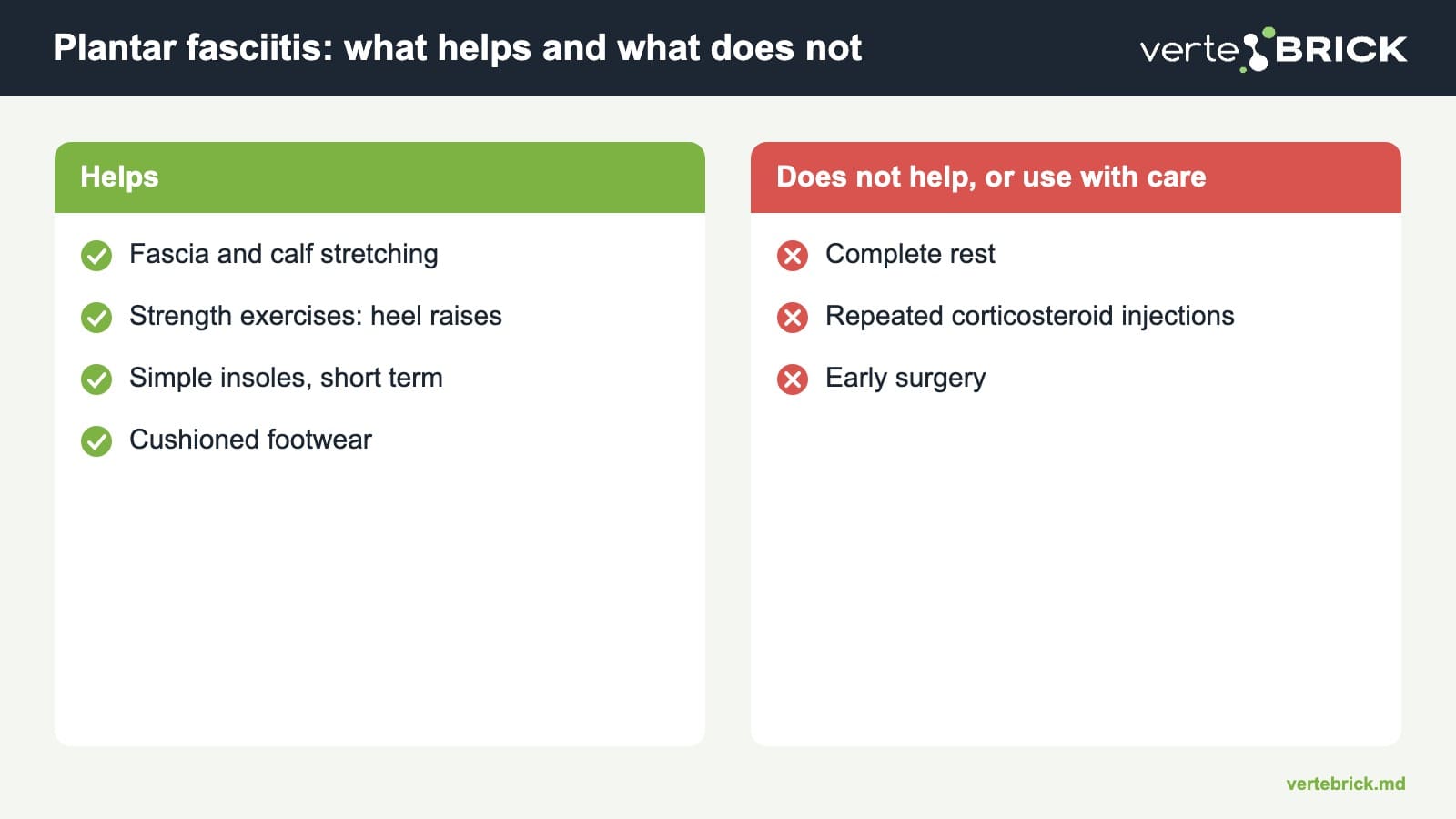
- Plantar fascia stretching: pull your toes back towards you with your hand, several times a day, especially before the first steps in the morning.
- Calf stretching, with the knee straight and then bent.
- Strength exercises: slow heel raises with a rolled towel under the toes. In a study, this type of exercise gave better results at 3 months than stretching alone.
- Simple off-the-shelf insoles or taping, in the short term. Custom-made insoles were not more effective than ordinary ones.
- Shoes with a cushioned sole and temporarily reducing running or long periods of standing.
What does not help, or needs caution
- Complete rest. The fascia and foot muscles get weaker.
- Repeated corticosteroid injections. They ease pain in the short term but can weaken the fascia and the fat pad under the heel.
- Early surgery. It is only considered after many months of proper treatment without results.
If the pain has lasted more than 6 months despite exercise, shockwave therapy may be an option to discuss with a specialist.
How long it lasts
Plantar fasciitis heals slowly, usually over a few months. With daily exercise, many people feel a clear improvement within 6–12 weeks.
When to see a doctor urgently
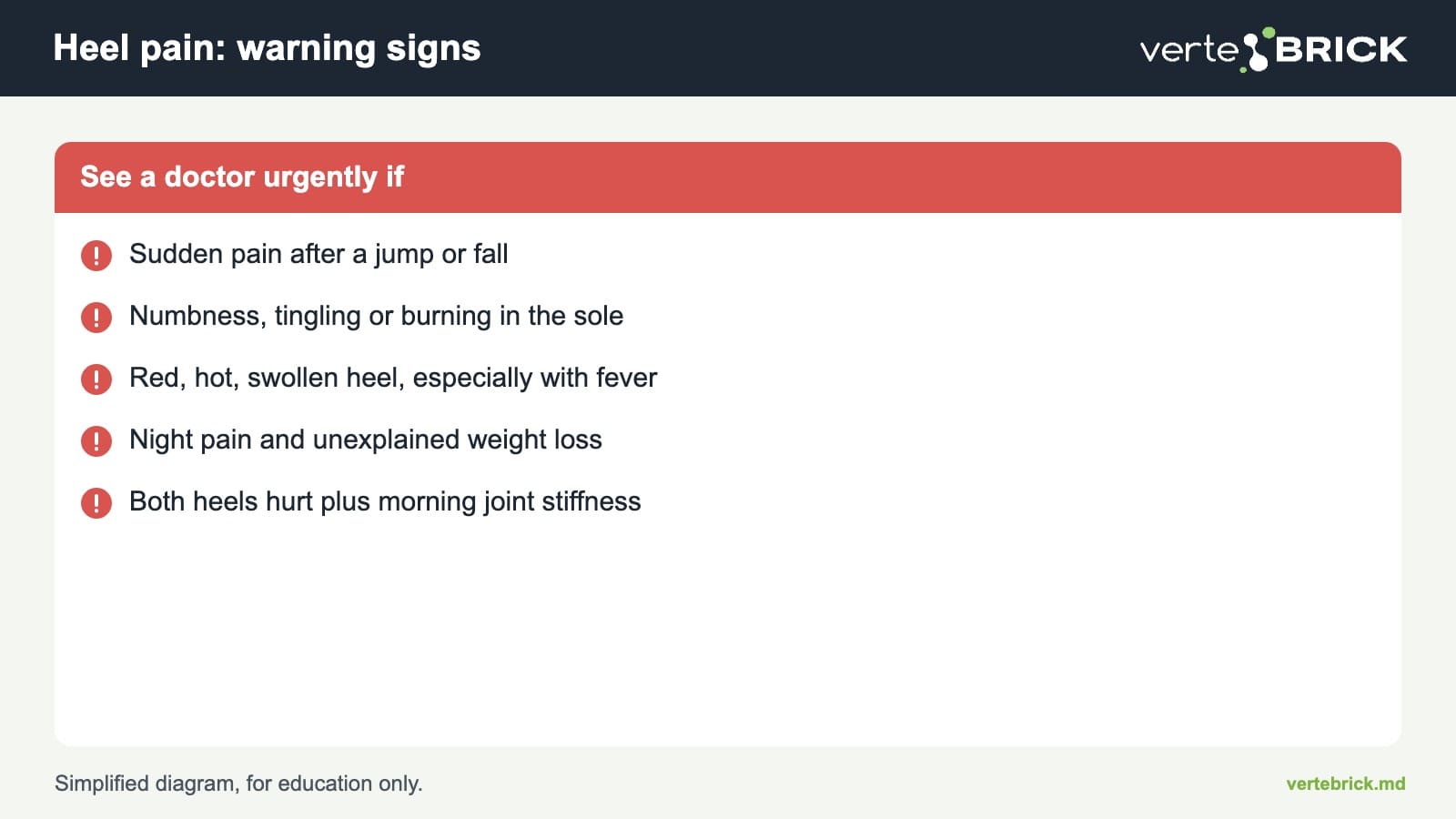
- the pain started suddenly after a jump or a fall;
- you have numbness, tingling or burning in the sole;
- the heel is red, hot and swollen, especially with fever;
- it also hurts at night, at rest, and you are losing weight without reason;
- both heels hurt, together with morning stiffness in the back or other joints.
How we work at Vertebrick
At the assessment, the physiotherapist checks your foot, ankle, calf and the way you walk, and asks how long you stand and what shoes you wear. You get a programme of stretching and strength exercises, advice on footwear and insoles and a plan for returning to long walks or running.
Frequently asked questions
Why does my heel hurt more in the morning?
The fascia shortens overnight. With the first steps it is stretched suddenly and hurts. Stretching before getting out of bed helps.
Does a heel spur need to be removed?
No. The spur is usually not the cause of the pain. The fascia is treated with exercise, and surgery is very rarely needed.
Which insoles should I buy?
Simple off-the-shelf insoles with arch support and a soft heel. Custom-made insoles did not give better results in studies.
Where can I get physiotherapy for heel pain in Chișinău?
At Vertebrick clinic, 12/2 Traian Blvd, Chișinău, Moldova. Bookings: +373 69 82 62 12.

Book an assessment
Come in for an assessment at Vertebrick, 12/2 Traian Blvd, Chișinău, Moldova. We are open Monday to Saturday, 08:00–20:00.
📞 +373 69 82 62 12 · WhatsApp: wa.me/37369826212 · Fill in the form
Author: the Vertebrick team, physiotherapy clinic in Chișinău. This article is for information only and does not replace a medical consultation.
Sources
- Buchbinder R. Plantar fasciitis. New England Journal of Medicine, 2004.
- Rathleff MS, Mølgaard CM, Fredberg U, et al. High-load strength training improves outcome in patients with plantar fasciitis: a randomized controlled trial with 12-month follow-up. Scandinavian Journal of Medicine & Science in Sports, 2015.
- DiGiovanni BF, Nawoczenski DA, Lintal ME, et al. Tissue-specific plantar fascia-stretching exercise enhances outcomes in patients with chronic heel pain. Journal of Bone and Joint Surgery (Am), 2003.
- Landorf KB, Keenan AM, Herbert RD. Effectiveness of foot orthoses to treat plantar fasciitis: a randomized trial. Archives of Internal Medicine, 2006.
- Koc TA, Bise CG, Neville C, et al. Heel Pain – Plantar Fasciitis: Revision 2023. Journal of Orthopaedic & Sports Physical Therapy, 2023.