
In short: sciatica is pain that starts in the lower back and runs down the buttock and leg, usually because a nerve in the lumbar spine is irritated, most often by a herniated disc. The good news: for most people it improves within weeks or months without surgery. Bed rest does not speed up recovery, while guided movement helps.
What is the sciatic nerve?
The sciatic nerve is the longest and thickest nerve in the body. It is formed by the nerve roots that leave the lumbar spine and sacrum (L4–S3), passes through the buttock, runs down the back of the thigh and, above the knee, divides into branches that reach the foot.
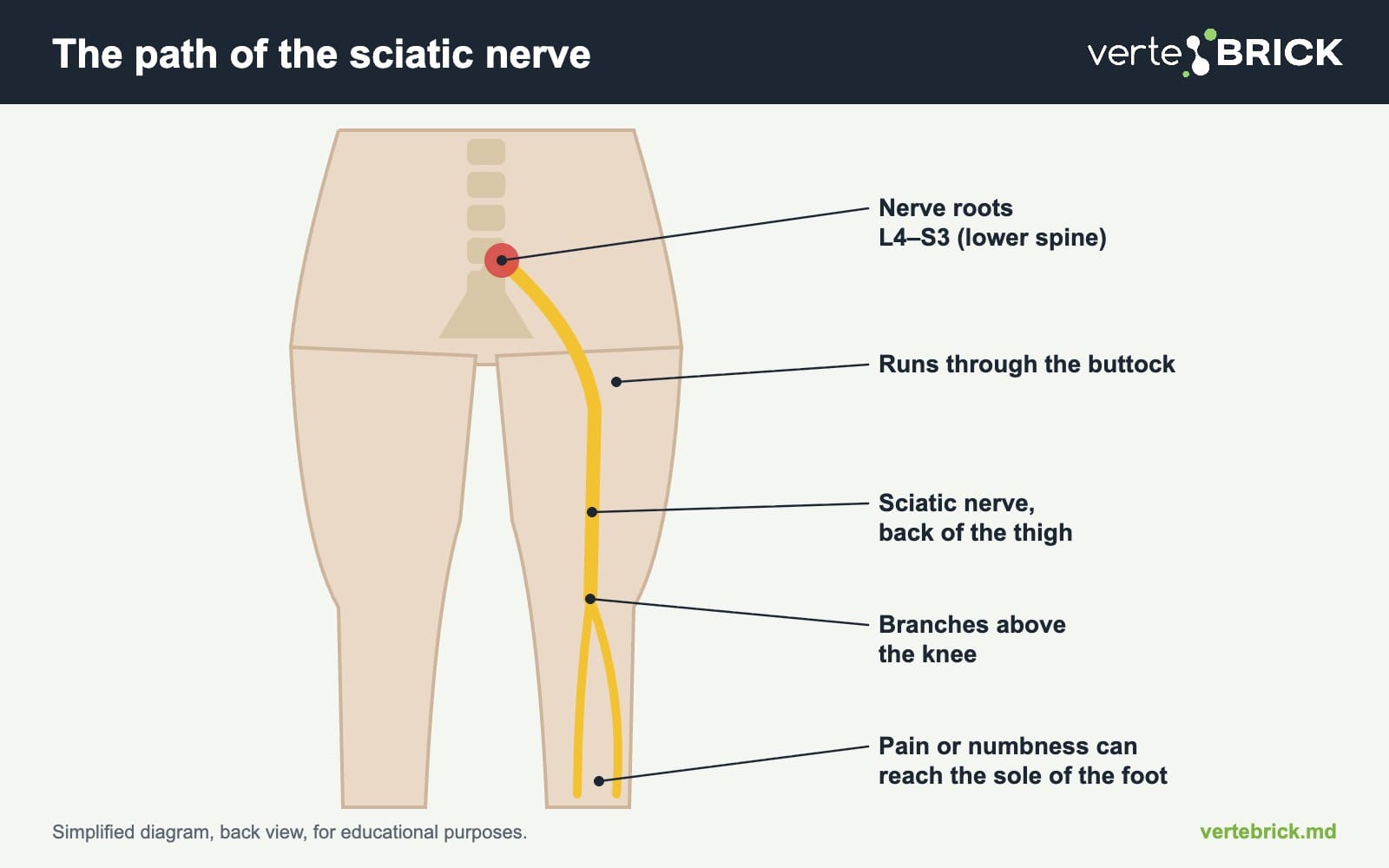
When one of its roots is compressed or irritated, pain is felt along the path of the nerve, even though the problem is in the spine. That is why your calf or foot may hurt while your back hurts only a little.
Common causes
- Lumbar disc herniation: the most common cause, especially between the ages of 30 and 50;
- lumbar spinal stenosis: narrowing of the spinal canal, more common after 60, with pain when walking that eases when you sit down;
- other, rarer causes: a slipped vertebra, injuries, infections or tumours.
"Piriformis syndrome", which is discussed a lot online, is a much rarer and debated cause. A proper assessment makes the difference.
Symptoms
- pain running down the buttock, the back or side of the leg, sometimes to the sole of the foot;
- leg pain is often worse than back pain;
- numbness, tingling or a burning feeling;
- pain gets worse with coughing, sneezing or long sitting;
- sometimes leg weakness, for example difficulty walking on your toes or heels.
When to see a doctor URGENTLY
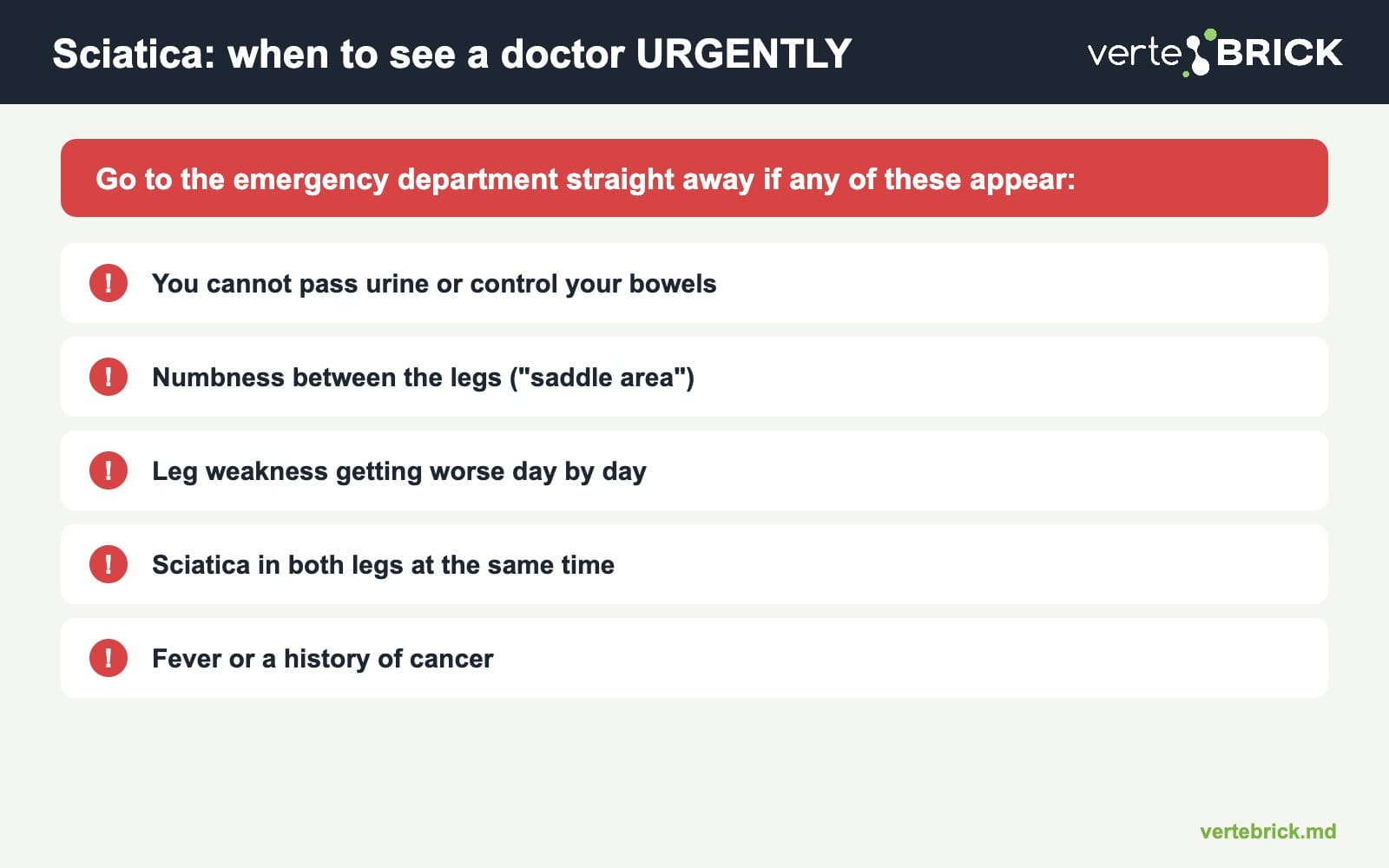
- you cannot pass urine, do not feel the urge, or cannot control your bowels;
- numbness between the legs ("saddle area");
- leg weakness getting worse day by day, or a dropping foot;
- sciatica in both legs at the same time;
- fever or a history of cancer.
The first two signs may point to cauda equina syndrome, a neurosurgical emergency. Do not wait and do not try exercises at home.
How long does sciatica last?
Research shows that sciatica usually has a favourable course:
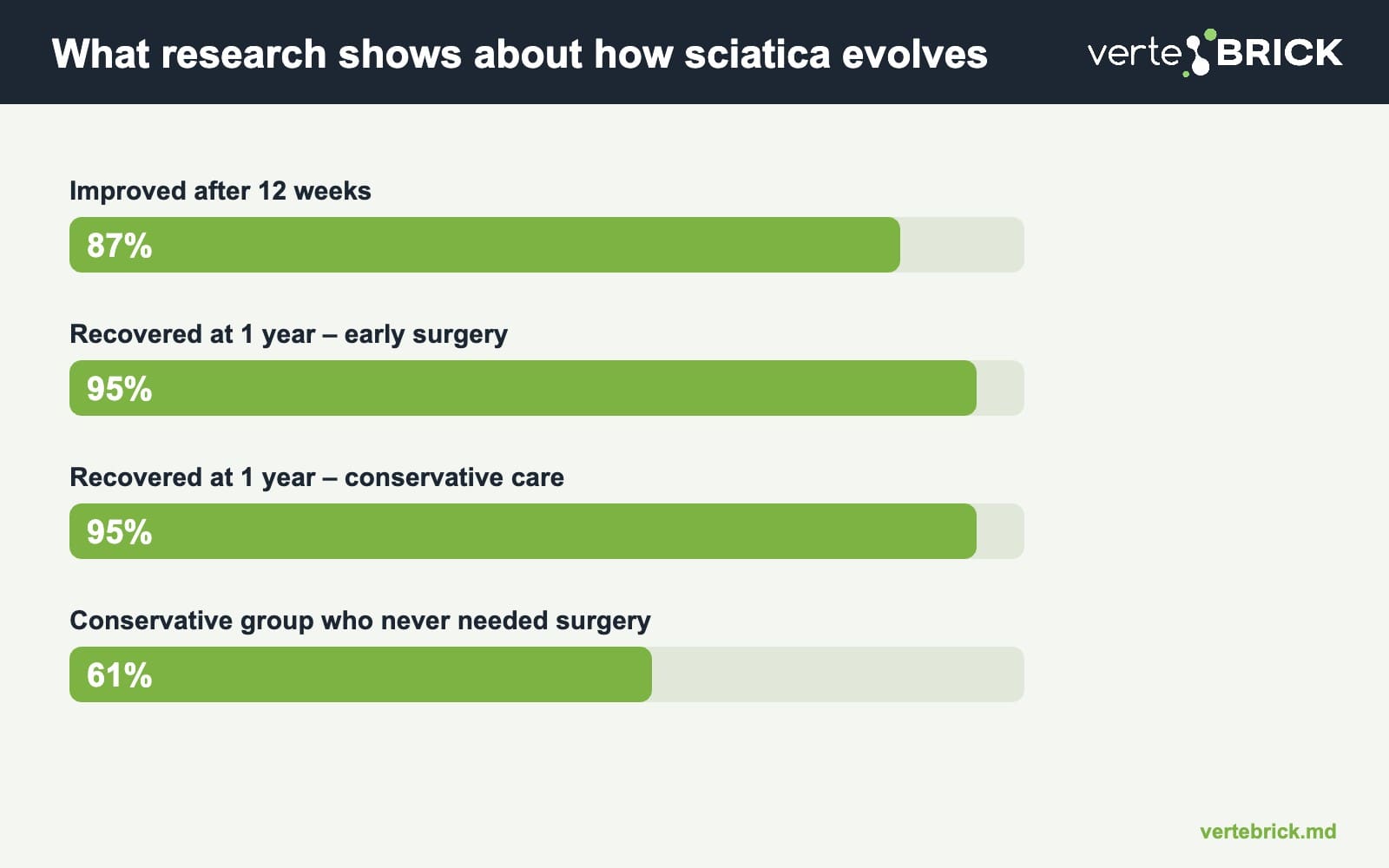
- In a study of 183 patients, 87% of patients reported improvement after 12 weeks, whether they stayed in bed or stayed active.
- In another study of 283 patients with severe sciatica, 95% of patients felt recovered after one year, both those who had early surgery and those treated conservatively.
Bed rest does not help
In the first study, patients who spent almost the whole day in bed for two weeks did not recover faster than those who carried on with their activities as far as the pain allowed. That is why guidelines advise staying active and adjusting your load, not lying down.
Surgery or conservative treatment?
Surgery has its place. In the second study, patients who had early surgery got rid of their leg pain faster. After one year, however, results were similar, and 61% of patients treated conservatively never needed surgery at all.
Surgery is discussed with a neurosurgeon when warning signs appear, when leg weakness gets worse, or when very severe pain persists after proper conservative treatment, usually over several weeks. Clinical guidelines also note that some medicines often used for sciatica (gabapentinoids, oral corticosteroids) have not shown benefit and can cause side effects.
What physiotherapy does
At Vertebrick, the physiotherapist first assesses you: strength, sensation, reflexes and the movements that make your leg pain better or worse. You then get a plan that may include:
- positions and exercises that ease the leg pain;
- gentle nerve mobility exercises;
- gradual strengthening of the trunk, glute and leg muscles;
- advice on sleep, walking, sitting and driving;
- a gradual return to work and sport.
If the assessment shows warning signs, we refer you to a doctor before you start exercising.
Frequently asked questions
How long does sciatica last?
For many patients the pain eases noticeably within 6–12 weeks. In studies, most people felt recovered after one year, even without surgery.
What should you avoid with sciatica?
Do not stay in bed for days, do not lift with a bent back, and do not do exercises that increase your leg pain. If an exercise pushes the pain further down the leg, stop and ask a specialist.
Does massage help a pinched sciatic nerve?
Massage can relax muscles and ease pain for a while, but it does not free the nerve from a disc herniation. It is useful as part of a plan with exercise.
When is an MRI needed?
When there are warning signs, or when surgery or an injection is being considered. Your doctor makes that decision.
Where can sciatica be treated in Chișinău?
At Vertebrick clinic, 12/2 Traian Blvd, with physiotherapy and a personalised plan.

Book an assessment
Come in for an assessment at Vertebrick, 12/2 Traian Blvd, Chișinău. We are open Monday to Saturday, 08:00–20:00.
📞 +373 69 82 62 12 · WhatsApp: wa.me/37369826212 · Fill in the form
Author: Vasile Cebotaru, physiotherapist, founder of Vertebrick clinic. This article is for information only and does not replace a medical consultation.
Sources
- Vroomen P.C. et al. (1999). Lack of effectiveness of bed rest for sciatica. New England Journal of Medicine, 340:418–423.
- Peul W.C. et al. (2007). Surgery versus prolonged conservative treatment for sciatica. New England Journal of Medicine, 356:2245–2256.
- NICE (2016, updated). Low back pain and sciatica in over 16s: assessment and management (NG59). nice.org.uk