
In short: tailbone pain (coccydynia) hurts most when you sit and when you get up. It often starts after a fall onto the buttocks, after childbirth or after long hours sitting on hard surfaces. Most cases settle without surgery: the right cushion, a change in how you sit, exercises and manual therapy help most patients within a few weeks or months.
Why it happens
The coccyx is the lower end of the spine. When you sit, part of your weight rests on it. A blow, childbirth, sitting leaned back for long periods or on a hard surface can irritate the joints and ligaments around it. Sometimes there is no clear cause.
Typical signs
- pain right at the end of the spine, above the buttocks;
- pain that worsens when sitting, especially leaning back;
- sharp pain at the moment you get up from a chair;
- pain when pressing on the tailbone;
- relief when standing or walking.
What helps
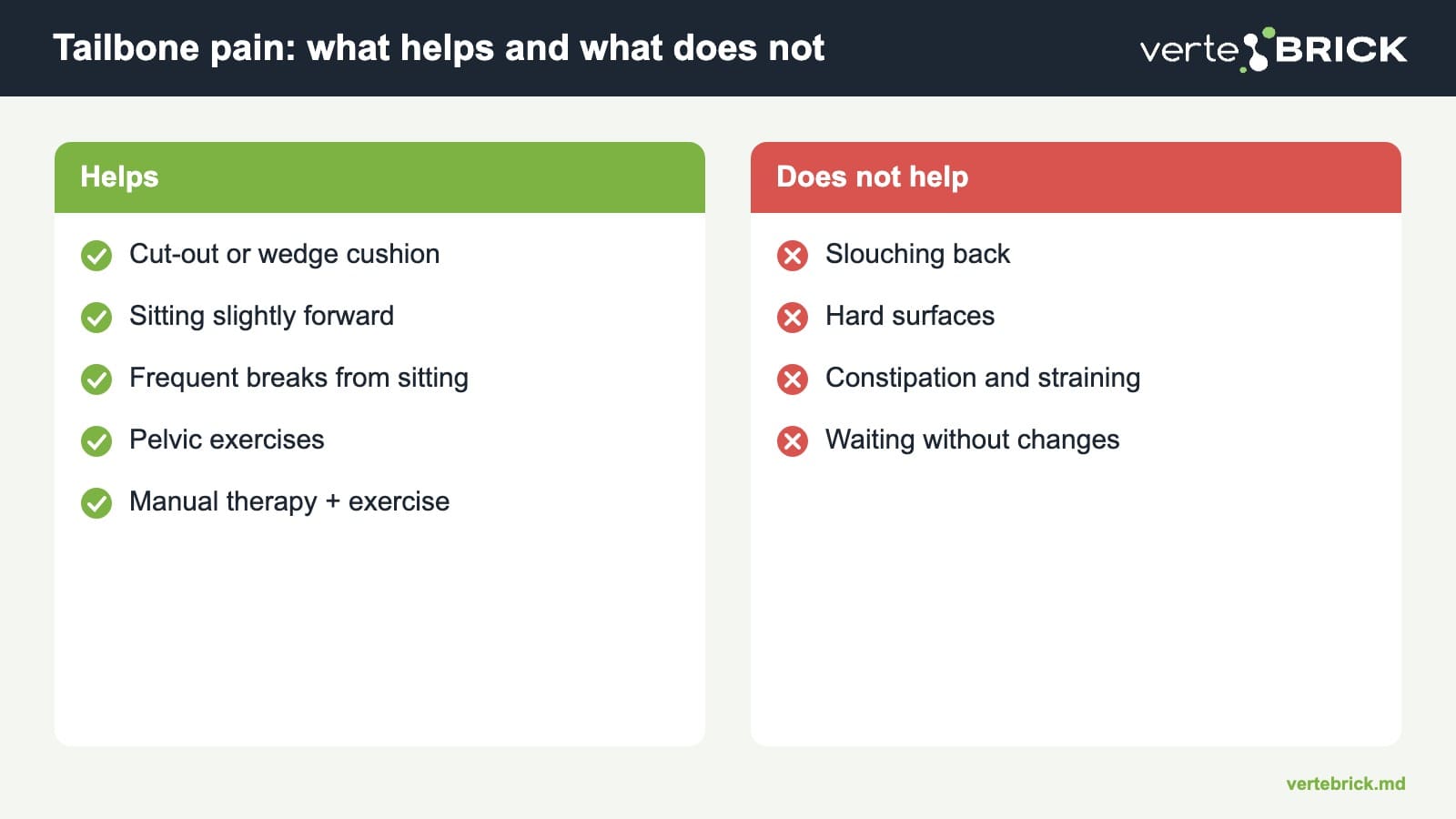
- A cushion with a cut-out at the back or a wedge cushion that takes weight off the tailbone.
- Sitting slightly forward, with your weight on the buttocks and thighs rather than the tailbone.
- Frequent breaks from sitting.
- Mobility and relaxation exercises for the pelvis and pelvic floor muscles.
- Manual therapy by a specialist, combined with exercise.
What does not help
- Slouching back on a sofa or in soft, deep chairs.
- Hard surfaces without a cushion.
- Constipation and straining on the toilet, which increase pressure in the area.
- Waiting without changing how you sit.
How long it lasts
Many cases improve within a few weeks. Longer-standing pain may need a few months. The vast majority of patients recover without surgery.
When to see a doctor
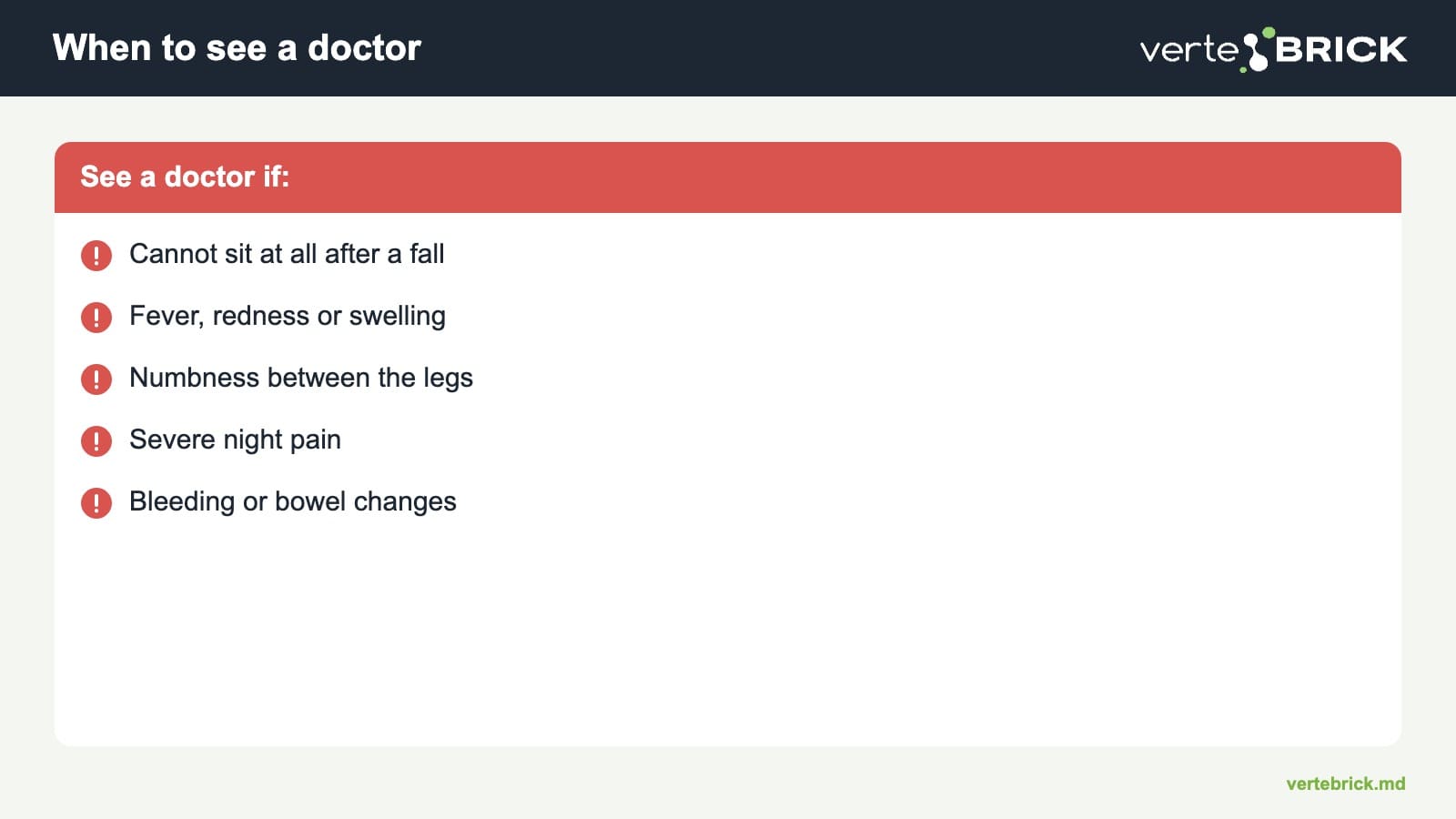
- after a hard fall you cannot sit at all or the pain is very severe;
- fever, redness or swelling around the tailbone;
- numbness between the legs or problems passing urine;
- severe night pain or unexplained weight loss;
- bleeding or changes in bowel habits.
How we work at Vertebrick
At the first visit we find out how the pain started, check for warning signs, look at how you sit and at the mobility of your pelvis and lower back. Then we show you how to sit without pain, choose the right exercises and check progress at every session.
Frequently asked questions
Why does my tailbone hurt when I sit?
Because when you sit leaning back, part of your weight presses directly on the tailbone. Irritation of the surrounding joints and ligaments causes the pain.
Which cushion is good for tailbone pain?
A cushion with a cut-out at the back or a wedge cushion that keeps pressure off the tailbone.
How long does tailbone pain last?
From a few weeks to a few months. Most patients recover without surgery.
Where can I get treatment for tailbone pain in Chisinau?
At the Vertebrick clinic in Chisinau, with exercises, manual therapy and sitting advice checked at every session.

Book an assessment
Come in for an assessment at Vertebrick, 12/2 Traian Blvd, Chișinău, Moldova. We are open Monday to Saturday, 08:00–20:00.
📞 +373 69 82 62 12 · WhatsApp: wa.me/37369826212 · Fill in the form
Author: the Vertebrick team, physiotherapy clinic in Chișinău. This article is for information only and does not replace a medical consultation.
Sources
- Lirette LS et al. Coccydynia: an overview of the anatomy, etiology, and treatment of coccyx pain. Ochsner J. 2014;14(1):84–87.
- Garg B, Ahuja K. Coccydynia — a comprehensive review on etiology, radiological features and management options. J Clin Orthop Trauma. 2021;12(1):123–129.
- Maigne JY, Chatellier G. Comparison of three manual coccydynia treatments: a pilot study. Spine. 2001;26(20):E479–E483.
- Finucane LM et al. International framework for red flags for potential serious spinal pathologies. J Orthop Sports Phys Ther. 2020;50(7):350–372.